
Headcount orchestration
What is headcount orchestration?
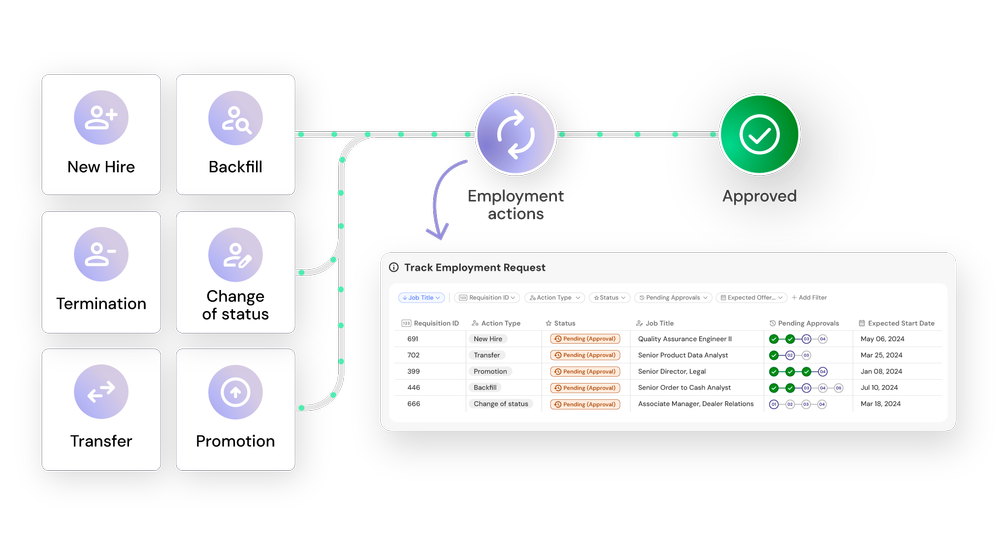
Headcount orchestration is the coordinated flow of a headcount change across Finance, HR, Recruiting, and budget owners, from request to approval to requisition to hire to plan, with every system updated at each step.

How it works
The five steps of headcount orchestration
Each step has an owner, and each one updates every connected system before the next begins.
- RequestBudget owner
A budget owner asks for a new role or a backfill. The request is tied to its position and budget line.
- ApproveFinance, HR, and leadership
The request routes to the right approvers by headcount owner, office tier, and title, and every decision is logged.
- RecruitRecruiting
The approved position becomes a job in the ATS. Changes in either system sync to the other.
- HireRecruiting and HR
The accepted offer flows back and is matched to the employee record in the HRIS, which stays the source of truth.
- Plan and reportFinance and leadership
The hiring plan, budget, and variance update as each step happens, so every team sees the same numbers.

Before and after
Manual versus orchestrated
Most headcount changes already pass through the same five steps. The difference is whether people or systems carry them from one step to the next.
- Requests are tied to a position and a budget line, instead of arriving in email or chat.
- Approvals route by owner, office tier, and title, instead of chasing approvers one by one.
- Approved roles become ATS jobs automatically, instead of someone creating the requisition by hand.
- Hires are matched to HRIS records, instead of matching them to the plan in a spreadsheet.
- The plan updates as each step happens, instead of waiting for month-end.
One change. Every system. Updated at each step.
What good looks like
Signs your headcount is orchestrated
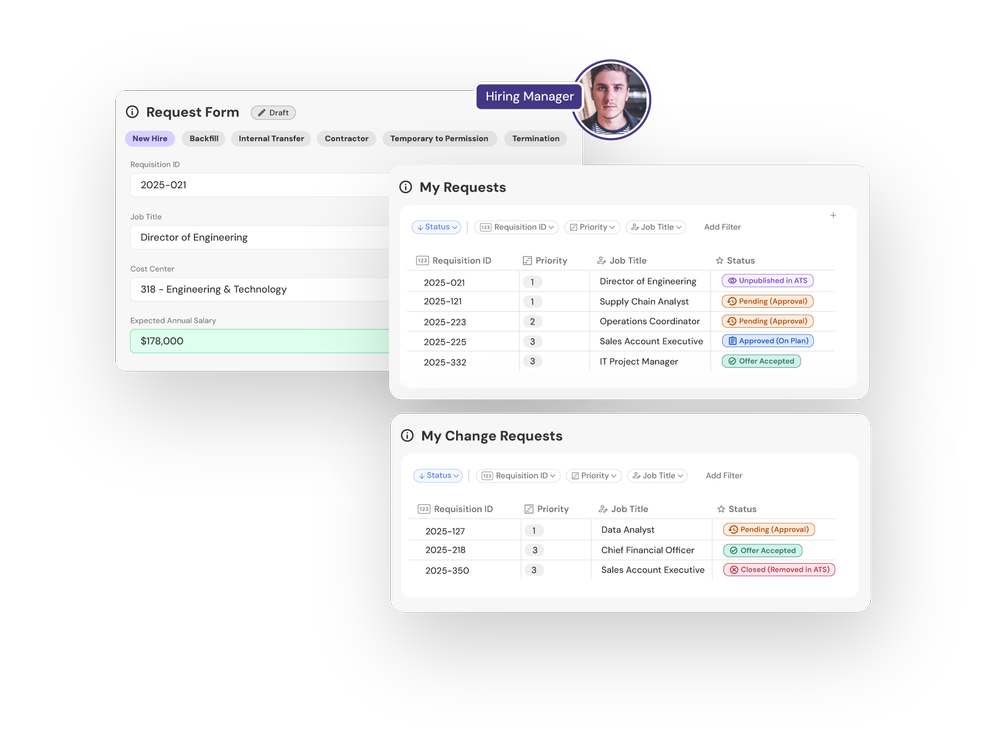
Approvals route themselves
Requests reach the right approvers by owner, office tier, and title, with no chasing.
Approval workflows →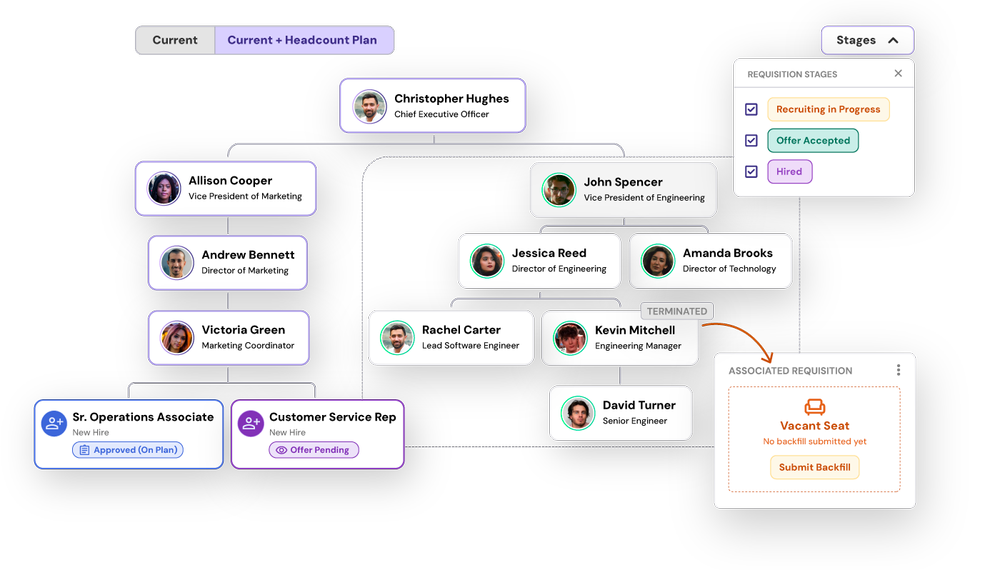
Backfills carry their history
A backfill shows the departing employee’s salary next to the new request.
Vacant seat management →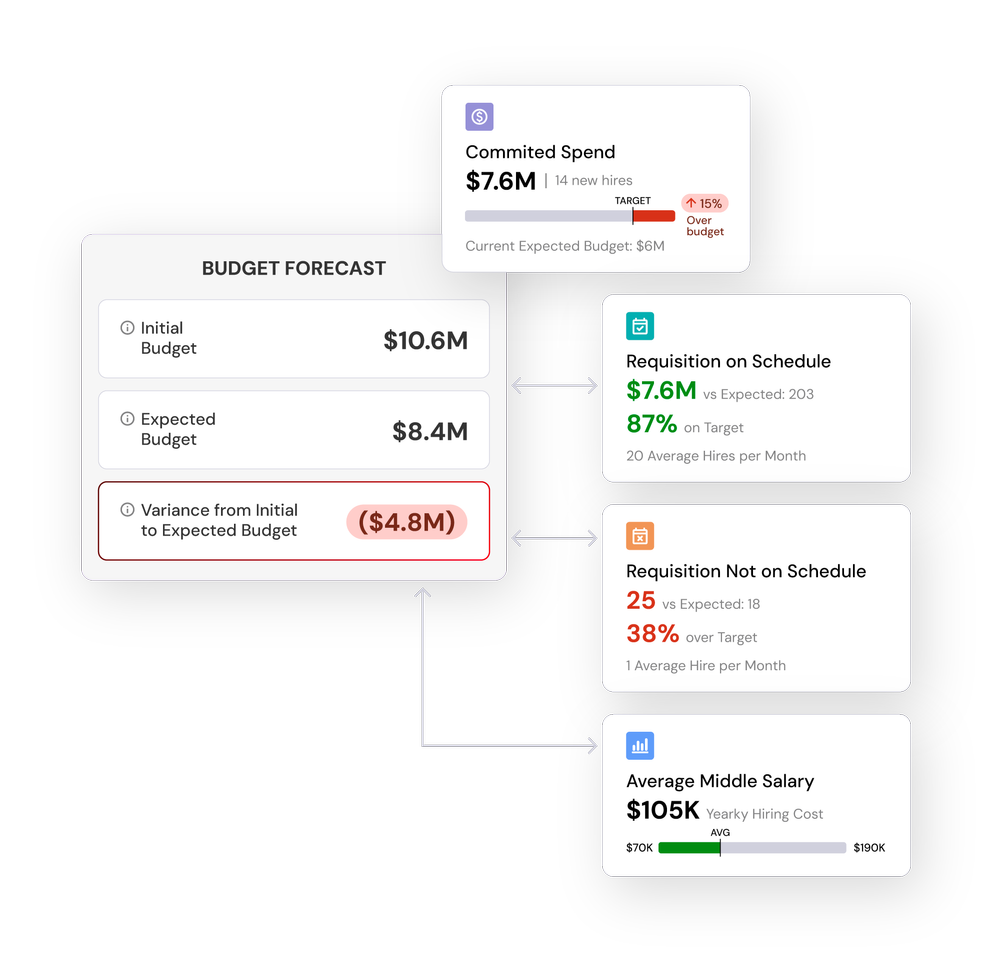
Finance sees changes as they happen
The plan and budget update with each step, not at month-end.
Variance tracking →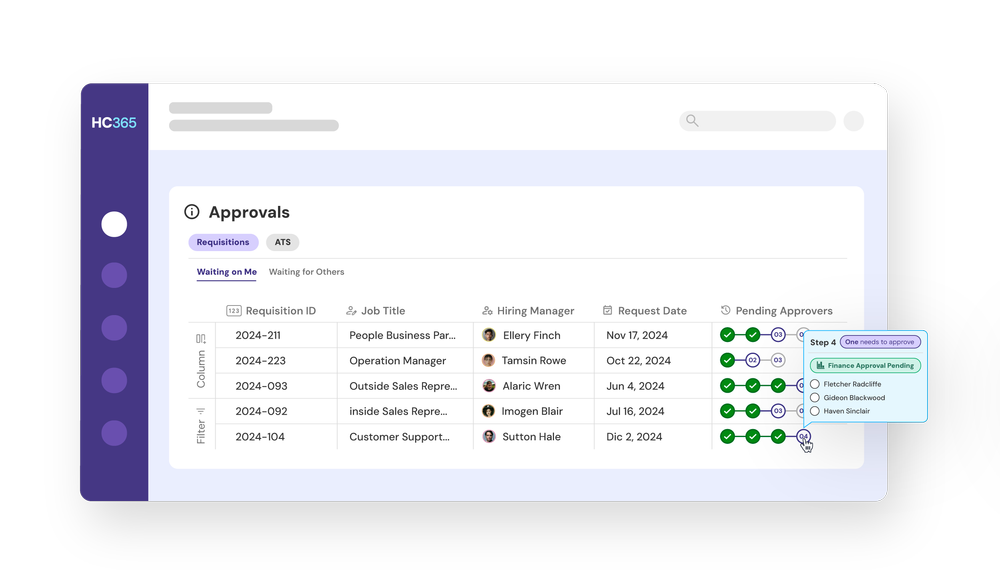
Every decision has a record
Who asked, who approved, and what changed is logged for audits.
Requisition activity feed →Also true when it’s working
Nothing is re-keyed
An approved role reaches the ATS without anyone copying it over.
Everyone sees the same number
Finance, HR, and Recruiting read one dataset, so counts match.
Related terms
Headcount orchestration and related terms
| Term | What it covers | How orchestration relates |
|---|---|---|
| Headcount planning | Deciding how many roles you need, where, and when | Orchestration carries out the plan, one change at a time |
| Workforce planning | Long-term organization design, skills, and capacity | Orchestration handles the near-term changes that shape it |
| Position management | Tracking budgeted positions and who fills them | Orchestration moves positions through requests, approvals, and hires |
| Workflow automation | Automating tasks inside one tool | Orchestration spans systems and keeps one ID across all of them |
| Recruiting operations | Running the hiring process | Orchestration connects hiring to the budget and the HRIS |
“headcount365 replaces hiring spreadsheets and automates hours of work.”

Common questions
What is headcount orchestration?
Headcount orchestration is the coordinated flow of a headcount change across Finance, HR, Recruiting, and budget owners, from request to approval to requisition to hire to plan, with every system updated at each step.
How is headcount orchestration different from headcount planning?
Headcount planning decides how many roles you need and when. Orchestration carries out each change in that plan across Finance, HR, Recruiting, and budget owners, with every system updated along the way.
Who is involved in headcount orchestration?
Budget owners request roles, Finance, HR, and leadership approve them, Recruiting hires for them, and Finance tracks the result against the plan.
Can AI agents take part in headcount orchestration?
Yes. Through the headcount365 MCP, AI agents can read and update headcount data, such as drafting a requisition and submitting it for approval, with each user’s role-based permissions applied. Agents can also start on events or schedules.
What does headcount orchestration run on?
Headcount infrastructure: a unified dataset, reconciliation, approvals, access control, and integrations. Without it, each step needs someone to re-key data between systems.
See orchestration in the headcount365 app
We’ll walk one headcount change from request to hire on your own systems.